
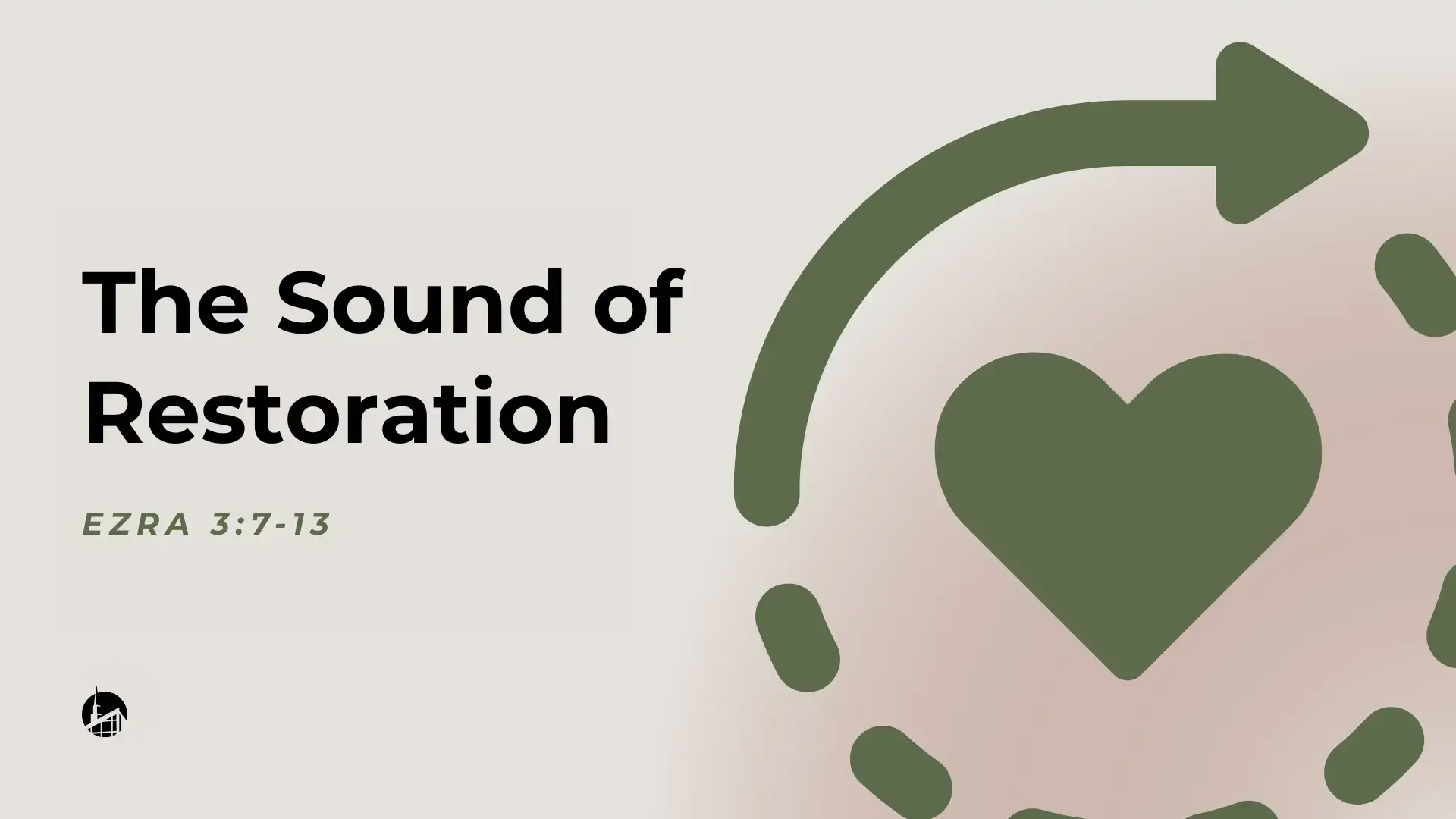
In the book of Ezra, we witness God’s sovereign hand guiding His people through exile and return. Even in the midst of national sin and its repercussions, God remains faithful, orchestrating events for restoration. This message from Ezra chapter 3, verses 7 through 13, explores the sounds accompanying renewal: shouts of praise mingled with tears of regret. As Pastor Léveillé shares, God mends what is broken, whether families, lives, or communities, yet the scars of sin remind us of our need for His grace. Through this passage, we see how restoration brings both celebration and sorrow, ultimately pointing to a merciful God who redeems.
Celebrate What God Is Rebuilding (vs. 10-11)
When the builders laid the foundation of the temple of the Lord, they set the priests in their apparel with trumpets, and the Levites the sons of Asaph with cymbals, to praise the Lord, after the ordinance of David king of Israel. And they sang together by course in praising and giving thanks unto the Lord; because he is good, for his mercy endureth for ever toward Israel. And all the people shouted with a great shout, when they praised the Lord, because the foundation of the house of the Lord was laid (Ezra 3:10-11, KJV).
Restoration begins with recognizing God’s work in rebuilding what has been lost. In this passage, the people of Israel, having returned from captivity, finally lay the temple’s foundation after years of delay. This moment sparks organized worship, with priests in their garments sounding trumpets and Levites clashing cymbals, following the pattern set by King David. Their songs emphasize God’s goodness and enduring mercy toward Israel, leading the congregation to shout in praise. This was no casual excitement; it was deliberate worship focused on God’s character, not merely the stones in place.
The opportunity to rebuild reflects divine mercy, fulfilling the purpose of their return: to worship God in Jerusalem. God had brought them back not just to dwell in the land but to restore their relationship with Him. Often, we experience God’s blessings, such as healing, provision, or salvation, yet the ultimate aim is worship. These Israelites had waited two years, facing opposition and building their own homes first, until prophets urged them to prioritize God’s house. Only after putting their hands to the task did celebration come.
This principle applies today. God assigns work before joy arrives. In Ephesians 2:10, we read that we are created in Christ Jesus unto good works, which God hath before ordained that we should walk in them (KJV). Engaging in His purposes, whether serving in the church or pursuing personal renewal, produces deep joy. Yet, the people rejoiced even at small beginnings, the mere foundation. We too should praise God for initial steps, like a mending friendship or budding spiritual conversations, without waiting for completion. Rejoice in what God is doing, giving Him credit for progress, as His mercy unlocks moments of pure worship.
Grieve What Sin Has Destroyed (vs. 12)
But many of the priests and Levites and chief of the fathers, who were ancient men, that had seen the first house, when the foundation of this house was laid before their eyes, wept with a loud voice; and many shouted aloud for joy (Ezra 3:12, KJV).
Amid the shouts of joy, another sound emerges: weeping. The older priests, Levites, and leaders, who remembered Solomon’s grand temple, grieve upon seeing the new foundation. It pales in comparison, a stark reminder of what sin had cost. Their idolatry and neglect led to exile and the temple’s destruction, and now, though God restores, the scars remain. These “ancient men” weep not just over a smaller building but over the consequences of their actions, realizing sin’s destructive power.
True spiritual progress demands brokenness over sin. Without it, joy remains superficial. As in the Welsh Revival of 1904, where hardened miners wept over their drift from God before rejoicing in salvation, or Chuck Colson’s transformation in prison amid the Watergate scandal, leading to his Prison Fellowship ministry, grief paves the way for renewal. In personal lives, sin destroys relationships, homes, and opportunities, yet admitting it opens the door to God’s mercy.
The pastor shares stories of a man facing prison despite his new faith in Christ, or a couple remarrying after salvation transformed their broken union. God builds back better with Jesus, but lingering effects like regret or legal repercussions persist. To advance, whether in marriage, family, or faith, we must look inward under the Holy Spirit’s guidance, hating our sin and confessing it. As 1 John 1:9 promises, If we confess our sins, he is faithful and just to forgive us our sins, and to cleanse us from all unrighteousness (KJV). Brokenness leads to repentance, turning tears into gratitude for redemption.
Value Sincerity Over Emotional Volume (vs. 13)
So that the people could not discern the noise of the shout of joy from the noise of the weeping of the people: for the people shouted with a loud shout, and the noise was heard afar off (Ezra 3:13, KJV).
The sounds of joy and weeping blend indistinguishably, heard from afar. Neither emotion competes; they complement each other in authentic renewal. The younger generation shouts in excitement over God’s fresh work, while elders weep over past losses. Both responses are valid, reflecting where individuals stand in their journey: some in the brokenness of repentance, others in the joy of restoration.
Spiritual depth cannot be measured by volume or outward display alone. Revival is about honesty before God, not manufactured emotion. Services may resound with amens or fall silent in conviction, yet what matters is the Holy Spirit’s work in hearts. Different temperaments exist in the body of Christ; one may raise hands in praise, another bow in grief. Judge not by appearance but guard the heart’s condition.
In this mingled noise, we hear the true sound of restoration: gratitude for God’s mercy alongside sorrow for sin’s cost. As Samuel noted, Hitherto hath the Lord helped us (1 Samuel 7:12, KJV), yet acknowledging personal fault deepens worship. Brokenness over sin leads to rejoicing in grace, creating a symphony of sincere faith.
Conclusion
The story in Ezra reminds us that God is a restorer, faithful even when we falter. His mercy endures forever, turning ruins into foundations of hope. Whether celebrating His rebuilding, grieving sin’s destruction, or embracing sincere responses, let us open our hearts to the Holy Spirit. For the unsaved, admit your sin and trust Christ’s sacrifice for salvation. For believers, confess personal failings and rejoice in His grace. May this sound of restoration echo in our lives, families, church, and nation, drawing us closer to a merciful God who redeems all things.