
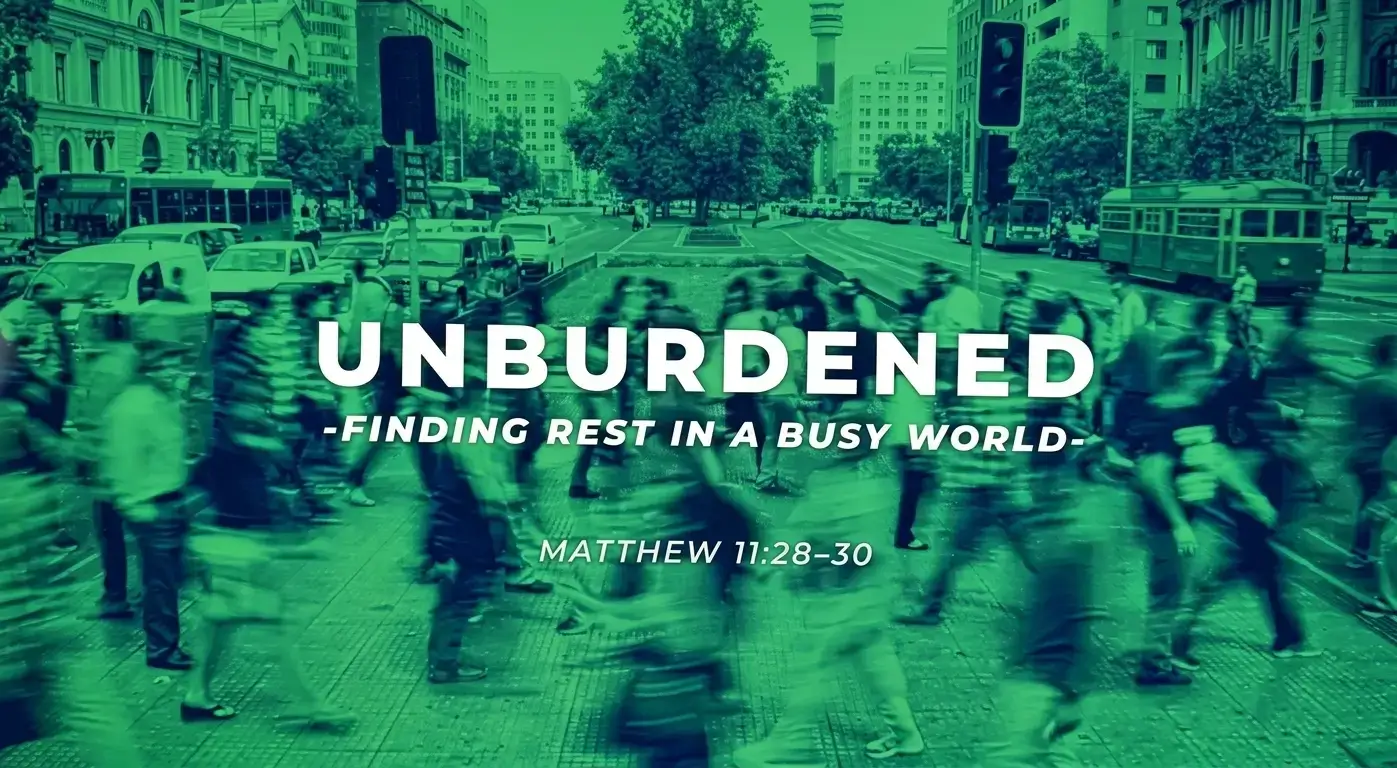
Life fills quickly. Work, family, ministry, and ordinary responsibilities can crowd a week until Sunday arrives and the days feel like a blur. Many wear busyness like a badge, answering questions about work or home with the same line: it has been busy. Pastor Torres reminded the congregation on a Wednesday evening that busyness is not always wrong. Parents drive children from one activity to the next. Bills must be paid. Serving others and studying Scripture are worthwhile. The trouble comes when even good things leave no room for the soul to breathe. This generation has more conveniences than any before it, from cameras in every pocket to washing machines and faster computers, yet convenience has not produced peace. Efficiency can fill a calendar without quieting what is tired underneath. In Matthew 11:28-30, Jesus speaks to people who are labouring and heavy laden and offers rest that does not begin with a better planner.
Recognize Your Burden
Jesus begins with the people who need rest. “Come unto me, all ye that labour and are heavy laden, and I will give you rest” (Matthew 11:28). To labour is to work to the point of exhaustion, the kind of day that ends in collapse rather than calm. To be heavy laden is to carry a weight that has become too much. He does not scold the weary or tell them to sort themselves out. He names their condition. Tiredness is not always a spiritual failure. God made bodies with limits. Even the Lord Jesus, in his earthly ministry, grew weary: “Jesus therefore, being wearied with his journey, sat thus on the well” (John 4:6). Psalm 127:2 warns that it is vain to rise early, sit up late, and eat the bread of sorrows as though endless effort were a mark of faith. Some burdens are simply physical. Sleep has been skipped, and the word no has never been said.
Other burdens stay hidden. Disappointment, grief, fear, unresolved conflict, and worry about tomorrow can bend a person inwardly. “Heaviness in the heart of man maketh it stoop: but a good word maketh it glad” (Proverbs 12:25). Emotional weight changes how a person thinks, speaks, and treats others. A short temper is sometimes the sign of a load no one else can see.
The setting of Matthew 11 also names a spiritual burden. Jesus was speaking to people pressed by the religious system of the scribes and Pharisees, who had surrounded God’s law with human traditions. Later he said of them, “For they bind heavy burdens and grievous to be borne, and lay them on men’s shoulders” (Matthew 23:4). Working to earn God’s acceptance exhausts the soul, because God never asked anyone to win his love by performance. His love rests on who he is, not on how well a person performs for him. Some still try to labour their way to salvation. Others who are already saved live as though his favour rises and falls with their output. Honesty before God starts here: I am labouring. I am heavy laden. I am tired.
Return To The Source Of Rest
The invitation is plain. Jesus does not say to fix behaviour first, settle the finances, or put every relationship in order and then come. He says, come unto me. True rest begins with Christ, and it begins while a person is still weary. The struggling, the discouraged, the confused, and the one who has failed are the very people he calls. Rest is often missed because it is sought in places that cannot give it. A better wage, a vacation, a hobby, or a change of circumstances may have a proper place, yet none of them can quiet the soul. A holiday can end in more exhaustion. A full night of sleep can still open into an anxious morning. A raise can leave the inner life unchanged. The problem is not always the schedule. Christ is the one who gives rest unto the soul, and looking to him means ceasing to expect that rest from everything else.
Receive The Rest Christ Offers
The next words can sound like a contradiction. “Take my yoke upon you, and learn of me; for I am meek and lowly in heart: and ye shall find rest unto your souls. For my yoke is easy, and my burden is light” (Matthew 11:29-30). Jesus is not promising a life with no responsibilities. Work remains. Family duties remain. Ministry remains. Bills still have to be paid, and hurts still have to be faced. He offers a different way of carrying what must be carried. A yoke speaks of submission to his leadership. Taking his yoke means surrendering direction: God is in charge, and life will no longer be managed alone. What cannot be controlled, from the economy to other people’s choices to tomorrow itself, can still be placed under his authority. The freedom is not the disappearance of the load. The freedom is that the believer is no longer the one bearing it alone.
Learning of him is part of living in that rest. The Gospels show a Saviour who was busy. Crowds pressed him, the sick came, and disciples needed teaching and correction. He was never controlled by his busyness. “And in the morning, rising up a great while before day, he went out, and departed into a solitary place, and there prayed” (Mark 1:35). Ministry activity is not the same thing as a settled soul. Time withdrawn to pray is how Jesus met pressure, and his people learn rest by following that pattern.
The promise is rest unto the soul, not merely a quieter body. The sweetest line in the invitation is the description of the one who gives it: “for I am meek and lowly in heart.” The Creator who took on flesh does not present himself as harsh, impatient, or demanding. He knows disappointment, sorrow, exhaustion, misunderstanding, and tears. He is approachable. “Let us therefore come boldly unto the throne of grace, that we may obtain mercy, and find grace to help in time of need” (Hebrews 4:16). He also understands weakness. “For we have not an high priest which cannot be touched with the feeling of our infirmities; but was in all points tempted like as we are, yet without sin” (Hebrews 4:15). Following him still includes obedience, service, self-denial, and a daily cross. His burden is light because those who take his yoke no longer haul life by themselves.
Conclusion
The aim of the evening was not a lighter mood on the drive home. It was to leave unburdened. Responsibilities will still be there. Disappointments will still need to be lived through. Jesus does not ask his people to pretend those things are gone. He asks them not to carry them alone. There is no burden too heavy, and no problem too tangled, for him to receive. The greatest freedom in the Christian life is not a calendar with nothing on it. It is knowing who can hold what the week keeps handing back. His word still stands: come unto me, all ye that labour and are heavy laden, and I will give you rest. Take my yoke, learn of me, and find rest unto your souls.