
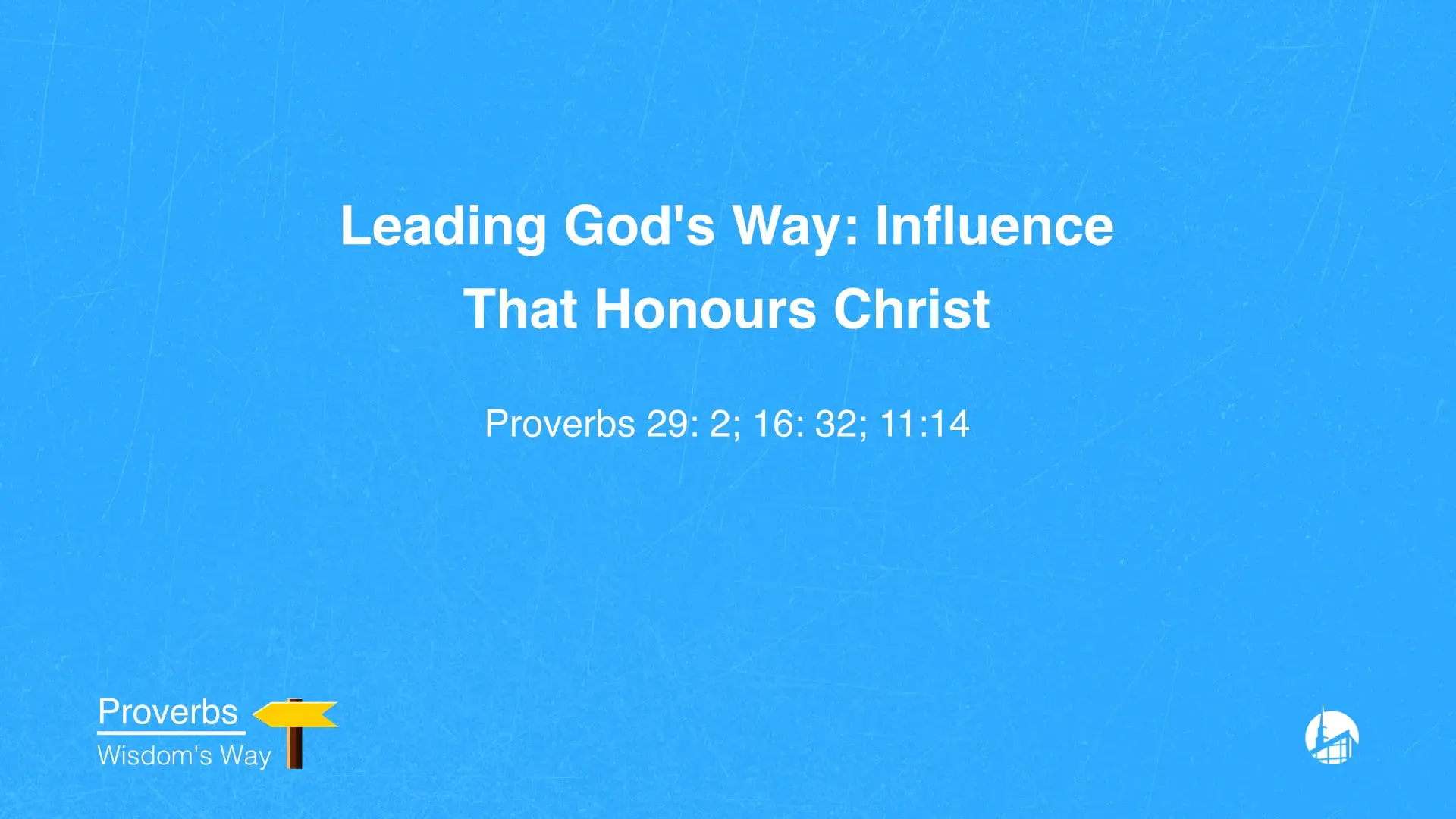
Every believer exercises influence. Whether as a parent, spouse, teacher, older sibling, or faithful church member, our lives shape the direction of those around us. Leadership, as the book of Proverbs presents it, is not primarily a title or a position of authority conferred by others. It is the power of influence that God grants each of us the moment we live in relationship with people. The question is not whether we lead, but whether we lead God’s way so that our influence honours Christ and draws others closer to Him.
The Scriptures set before us a clear standard. Proverbs 29:2 declares, “When the righteous are in authority, the people rejoice: but when the wicked beareth rule, the people mourn.” Proverbs 16:32 states, “He that is slow to anger is better than the mighty; and he that ruleth his spirit than he that taketh a city.” And Proverbs 11:14 reminds us, “Where no counsel is, the people fall: but in the multitude of counsellors there is safety.” These verses form the foundation for five practical principles that guide us in stewarding our influence for the glory of Christ.
Leading with a Righteous Life (Proverbs 16:12; 20:28; 29:14)
Leadership flows from who we are in private. We cannot lead others toward righteousness while living for what is wrong. Proverbs 16:12 declares, “It is an abomination to kings to commit wickedness: for the throne is established by righteousness.” The stability of any leadership is not found in natural ability, personality, or strategic skill; it is established by righteousness. Talent may open doors, but only character keeps them open.
Proverbs 20:28 adds, “Mercy and truth preserve the king: and by lovingkindness he upholdeth his throne.” Mercy speaks of covenant faithfulness and loyal love, while truth speaks of reliability and integrity. A leader who is both compassionate and consistent preserves his or her influence. Proverbs 29:14 further tests the genuineness of our character: “The king that faithfully judgeth the poor, his throne shall be established for ever.” How we treat the vulnerable reveals what is truly in our hearts.
Children are shaped far more by our example than by our rules. They learn what it means to follow Christ by watching us day after day. In the church, people ultimately follow our walk with God more than our words. As Robert Murray McCheyne understood, the greatest need of any congregation is the personal holiness of its leaders. We cannot take others further in their walk with God than we are willing to go ourselves. Our private devotion, our consistency in prayer, our love for the Word, and our faithfulness in the local church set the standard that others will follow.
Leading with Wise and Just Decisions (Proverbs 21:3; 28:5)
Godly leadership requires more than good intentions; it demands wise and just decisions. Proverbs 21:3 states, “To do justice and judgment is more acceptable to the LORD than sacrifice.” God values a life that consistently applies truth in everyday situations far above impressive outward acts of devotion. Proverbs 28:5 explains the source of such discernment: “Evil men understand not judgment: but they that seek the LORD understand all things.”
Those who continually seek the Lord develop spiritual perception. They turn to God when making decisions about family, housing, employment, or ministry. Evil men lack this discernment because their lives are not oriented toward God. A leader who fails to seek the Lord will eventually mislead those who follow, regardless of sincerity. Wise decisions flow from an ongoing dependence on the Lord and a commitment to apply His Word faithfully in real-life situations.
Leading with Humility and Teachability (Proverbs 11:14; 20:18)
No leader has a monopoly on wisdom. Proverbs 11:14 reminds us, “Where no counsel is, the people fall: but in the multitude of counsellors there is safety.” Proverbs 20:18 adds, “Every purpose is established by counsel: and with good advice make war.” Plans become firm and secure when they are tested and refined through godly counsel.
Pride isolates a leader and leaves him or her vulnerable to unnecessary failure. Humility listens. Whether in marriage, parenting, or church leadership, we all need others who are both able and permitted to speak truth into our lives. Independence that goes unchecked eventually hardens into pride, which blinds us to our own weaknesses. God never designed leadership to function in isolation. Wise leaders actively invite counsel and correction because they know their own limitations and desire to lead well.
Lead by First Leading Yourself (Proverbs 16:32; 25:28)
Before we can lead others, we must first be led by the Holy Spirit and exercise self-control. Proverbs 16:32 declares, “He that is slow to anger is better than the mighty; and he that ruleth his spirit than he that taketh a city.” Proverbs 25:28 warns, “He that hath no rule over his own spirit is like a city that is broken down, and without walls.”
A city without walls was vulnerable and unstable. Likewise, a leader who cannot govern his or her own emotions, thoughts, words, or habits will eventually lose influence. The fruit of the Spirit must be evident in our lives. Public strength cannot compensate for private indiscipline. The greatest battle in leadership is not external; it is the internal battle for mastery of our own spirit. Only when we are controlled by the Holy Spirit can we lead others effectively.
Lead Knowing Your Influence Shapes Others (Proverbs 29:2; 11:11)
Leadership always creates an atmosphere. Proverbs 29:2 reminds us that “when the righteous are in authority, the people rejoice: but when the wicked beareth rule, the people mourn.” Proverbs 11:11 adds, “By the blessing of the upright the city is exalted: but it is overthrown by the mouth of the wicked.”
Righteous leadership produces joy, stability, and well-being. Unrighteous or inconsistent leadership produces heaviness, confusion, and unrest. Over time, churches, homes, and groups begin to reflect the spirit of their leaders. Our attitudes, words, and daily conduct quietly disciple others, whether we intend it or not. As parents we set the tone of the home. As leaders in the church we shape the spiritual climate others experience. Our influence multiplies what is in our hearts. The question we must each answer is whether we are leading people closer to Christ or farther from Him.
Conclusion
The book of Proverbs calls every believer to examine how we steward the influence God has given us. Our lives are taking someone somewhere. May we lead from a righteous life, with wise and just decisions, in humility and teachability, by first leading ourselves under the control of the Holy Spirit, and with full awareness that our influence shapes others. When we lead God’s way, our homes, our churches, and our communities will rejoice. May the Lord grant us grace to walk closely with Him so that our influence honours Christ and helps others follow Him more faithfully.