
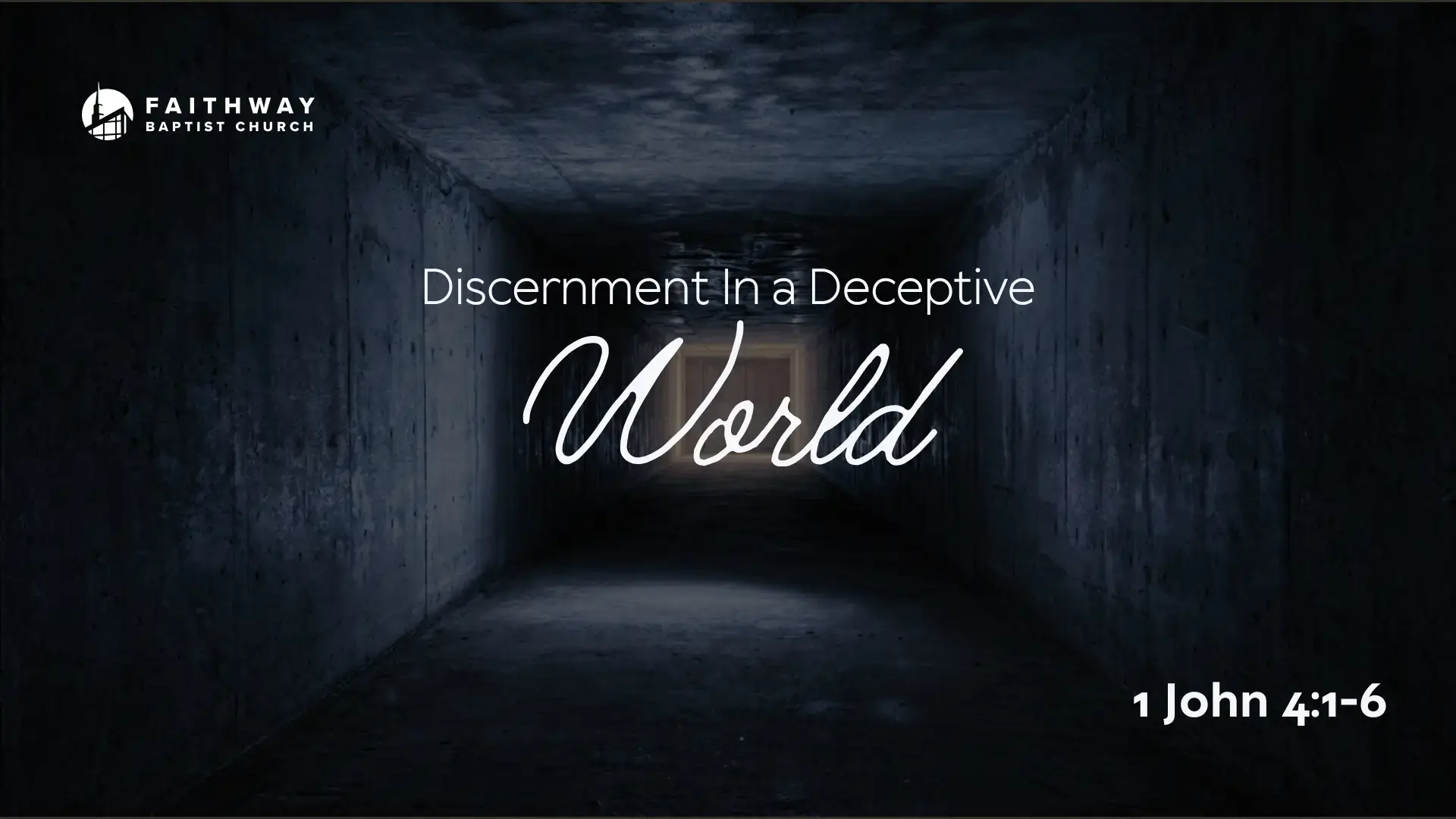
In the series Avenues of Assurance, the apostle John shows believers the marks that confirm a genuine relationship with the Lord. In 1 John 4:1-6 he turns to the vital matter of discernment. We live in a day when voices multiply faster than ever before. Social media, podcasts, online videos, and even artificial intelligence flood people with competing claims about life, truth, and God. Many respond by mixing ideas from different sources or by throwing up their hands in frustration, asking with Pilate of old, “What is truth?” Yet Scripture assumes both that truth exists and that error exists, and that those who belong to Christ can tell the difference.
The text reads:
“Beloved, believe not every spirit, but try the spirits whether they are of God: because many false prophets are gone out into the world. Hereby know ye the Spirit of God: Every spirit that confesseth that Jesus Christ is come in the flesh is of God: And every spirit that confesseth not that Jesus Christ is come in the flesh is not of God: and this is that spirit of antichrist, whereof ye have heard that it should come; and even now already is it in the world. Ye are of God, little children, and have overcome them: because greater is he that is in you, than he that is in the world. They are of the world: therefore speak they of the world, and the world heareth them. We are of God: he that knoweth God heareth us; he that is not of God heareth not us. Hereby know we the spirit of truth, and the spirit of error.”
John writes to Christians living in a confusing world and calls them to clear-headed spiritual testing. Discernment is not cynicism or pride. It is the careful distinction between truth and error that flows from love for Christ and a desire to remain faithful to Him. Every destructive path in life begins with a lie believed. Financial ruin often starts with the lie that one more bet will fix everything. Broken homes often begin with the lie that another person will finally bring happiness. Eternal condemnation follows the lie that good works or religious effort can make a person right with God. Truth matters, both for salvation and for daily living after salvation.
Test Every Spiritual Voice by the Truth of Christ (vs. 1-3)
John begins with a clear command: “Beloved, believe not every spirit, but try the spirits whether they are of God.” Belief is essential, yet it must be directed toward what is true. An open mind that accepts every claim with equal weight is not a virtue. It is a danger. Every spiritual message originates in the spiritual realm. Ephesians 6:12 reminds us that we wrestle not against flesh and blood, but against principalities, against powers, against the rulers of the darkness of this world, against spiritual wickedness in high places. First Timothy 4:1 states that in the latter times some shall depart from the faith, giving heed to seducing spirits and doctrines of devils. False teaching is not merely human invention. It is one of the enemy’s chief weapons.
Therefore every teaching must be measured by Scripture, not by the personality or intensity of the speaker, not by popularity, and not by whether the message appears on a bestseller list. When Paul preached in Berea, the listeners “received the word with all readiness of mind, and searched the scriptures daily, whether those things were so” (Acts 17:11). That remains the pattern. Never accept any message simply because a preacher said it. Accept it only if it lines up with the Word of God.
The ultimate test centres on Jesus Christ. Every false religion and every cult is wrong about Him. Some deny His deity. Some, like the early teachers John confronted, deny that He truly came in the flesh. Others affirm His person yet deny the full sufficiency of His finished work on the cross, adding human effort or religious ritual. When religious people come with a message, the most direct question is simply, “What do you believe about Jesus Christ?” Dig carefully into that answer and the source of the teaching becomes clear.
A persuasive communicator is not necessarily a faithful one. Scripture can be quoted and still be twisted out of its proper context. Believers must therefore test every spiritual voice by the truth of Christ as He is revealed in the Word.
Trust the Spirit to Give You Victory Over Error (vs. 4)
John continues, “Ye are of God, little children, and have overcome them: because greater is he that is in you, than he that is in the world.” The Spirit of truth who indwells every believer is greater than the spirit of error at work in the world. Satan is a created being. The Holy Spirit is almighty God. The spirit of antichrist is already active, yet the Spirit of God lives within those who belong to Christ and enables them to recognise and reject falsehood.
This victory is not automatic. It requires familiarity with the truth. The Word of God is the sword of the Spirit (Ephesians 6:17). A coffee taster licensed by the state of New York can identify the precise origin of a bean because he has trained his palate on the genuine article. In the same way, believers do not need to sample every false doctrine. They need to know the real thing thoroughly. “O taste and see that the Lord is good.” Read the Scriptures consistently. Sit under faithful preaching. Ask the Holy Spirit to illuminate the Word. As the truth becomes more familiar, error becomes more obvious.
If a person is not yet certain of salvation, the first step is to recognise personal sin and place full trust in Jesus Christ alone. The moment a sinner believes, the Holy Spirit takes up residence. From that point onward, greater is He that is in the believer than he that is in the world, and the Spirit uses the Word to divide truth from error.
Treasure God’s Truth Over the World’s Approval (vs. 5-6)
John explains why false teachers often appear successful: “They are of the world: therefore speak they of the world, and the world heareth them.” Their message flatters human pride, minimises sin, removes the necessity of repentance, and promises happiness without holiness. Such teaching gathers crowds because it offers the benefits of religion without the cross. Truth, however, has never been decided by majority vote. Only God determines what is true.
Noah preached to a generation that refused to listen. Jeremiah stood almost alone. The Lord Jesus Himself was rejected by the very nation to which He came. Popularity has never been God’s measure of truth. The question is never how many people accept a message. The question is always whether God has spoken and what He has said.
Every day voices speak from screens, from books, from classrooms, from friends, and even from within one’s own heart. Not every voice deserves trust. The three anchors John leaves are clear: test every spiritual claim by what it says about Jesus Christ, trust the Holy Spirit who lives within and who wields the sword of the Word, and treasure God’s truth above the world’s approval.
Conclusion
We live in a deceptive world filled with messages that sound plausible yet lead away from God. The safest place to stand is firmly where God has spoken. Test the spirits by the Word of God. If you do not yet know Christ, come to Him today. Recognise that you are a sinner and that Jesus Christ died in your place. Trust Him alone for forgiveness and salvation. The moment you do, the Holy Spirit takes up residence, and greater is He that is in you than he that is in the world. If you already belong to Christ, rededicate yourself to knowing Him through His Word and to standing on the truth He has revealed, no matter how loudly the world objects. The Christian who knows Christ best is the one best equipped to discern truth from error.