
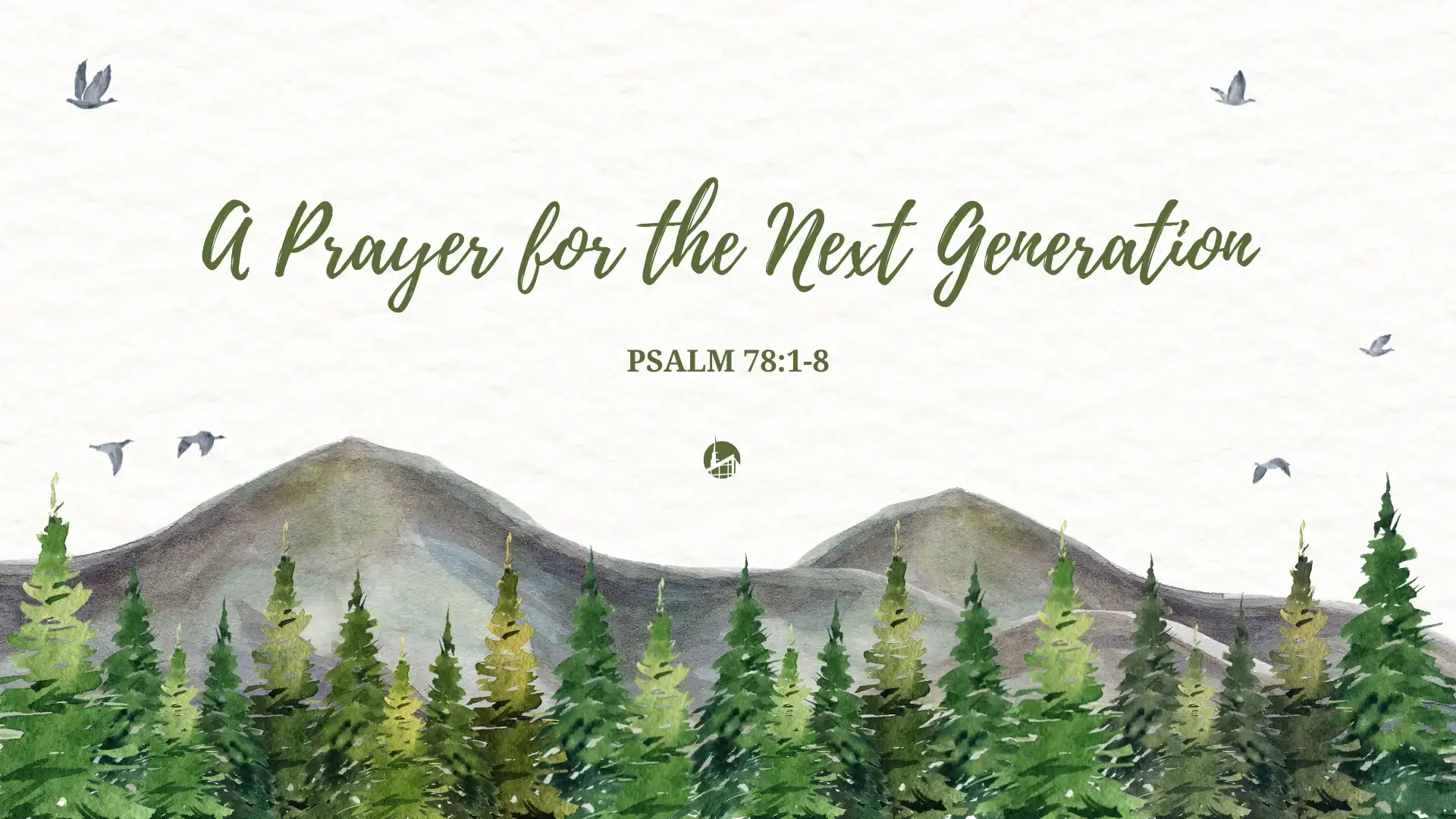
Psalm 78, a Maschil of Asaph, serves as a profound psalm of wisdom and instruction. Asaph, a Levite singer and seer in David’s court, recounts Israel’s history to remind God’s people of His faithfulness despite their repeated rebellion. The opening verses establish a vital responsibility: passing on faith to the next generation. This message explores how parents, grandparents, church leaders, and the entire body of Christ can fulfil this calling through teaching, example, and prayer.
His Call to the People (Psalm 78:1-3, 5)
Give ear, O my people, to my law: incline your ears to the words of my mouth. I will open my mouth in a parable: I will utter dark sayings of old: Which we have heard and known, and our fathers have told us. … For he established a testimony in Jacob, and appointed a law in Israel, which he commanded our fathers, that they should make them known to their children.
Asaph begins with a direct summons to attention. He urges the people to listen intently to God’s law, the Torah revealed through Moses. This call directs focus not to human wisdom but to divine instruction. In an age overflowing with advice from countless sources, true guidance remains rooted in Scripture. Parents and leaders must seek counsel from God’s unchanging Word rather than fleeting trends or secular solutions. The command in verse 5 reinforces this duty: God appointed the law so fathers would make it known to their children, ensuring the testimony endures.
His Call to Action (Psalm 78:4-5)
We will not hide them from their children, shewing to the generation to come the praises of the LORD, and his strength, and his wonderful works that he hath done. For he established a testimony in Jacob, and appointed a law in Israel, which he commanded our fathers, that they should make them known to their children.
The resolve “we will not hide them” conveys boldness and commitment without shame. This action involves both teaching God’s truth and living it visibly. The word “shew” implies marking or inscribing clearly, so others can see it plainly. Children need more than words; they require examples. True discipleship starts at home, where parents prioritise Scripture over distractions and model Christ-like living. Churches, schools, camps, and programmes serve as helpful tools, but they cannot replace the primary role of the family. Husbands must love their wives as Christ loves the church, wives must submit as Scripture directs, and both must train children in the nurture and admonition of the Lord. Authentic faith shines brightest in everyday life, especially when no one watches.
His Communication of a Hope (Psalm 78:6-7)
That the generation to come might know them, even the children which should be born; who should arise and declare them to their children: That they might set their hope in God, and not forget the works of God, but keep his commandments.
The ultimate purpose extends beyond mere knowledge or moral behaviour. The goal is that future generations know God personally, place full trust in Him, remember His mighty works, and obey His commandments from the heart. Rules alone cannot produce genuine faith; young people must develop their own convictions and choose to follow God because they love Him. This hope guards against superficial or autopilot Christianity. Parents and leaders pray that faith becomes authentic, that young hearts see God’s reality through answered prayer and provision, just as previous generations experienced. This chain of testimony ensures faith continues across generations.
His Warning of the Past (Psalm 78:8)
And might not be as their fathers, a stubborn and rebellious generation; a generation that set not their heart aright, and whose spirit was not stedfast with God.
Asaph contrasts the desired outcome with Israel’s tragic pattern. Despite God’s marvellous deeds—dividing the sea, leading with cloud and fire, providing water from rocks—the people rebelled, tempted God, and flattered Him with insincere words. Their cycle of sin, punishment, superficial repentance, and renewed rebellion reveals a failure to set hearts steadfastly on God. This warning cautions against complacency. Inconsistent living at home creates a distorted view of God. Children may learn grace in church yet witness none elsewhere, leading to hypocrisy rather than heartfelt devotion. The pattern can be broken only through genuine commitment to teaching and modelling truth.
In closing, Psalm 78 reminds us that God never abandons His people. Though the task feels weighty—raising children amid intense challenges, uncertainties, and cultural pressures—revival comes from God alone. We commit to our part: teaching diligently, living faithfully, and praying desperately. As we trust and obey, we rest in His promise to shepherd with integrity of heart and skillfulness of hands (Psalm 78:72). May every parent, grandparent, and believer rise to this calling, ensuring the next generation knows the Lord personally and walks steadfastly in His ways.
Conclusion
The futures of our young people rest not on worldly counsel or chance but on God’s grace working through committed believers. Let us renew our dedication to live out Scripture visibly, teach it faithfully, and intercede earnestly. In doing so, we partner with God in shaping generations that set their hope firmly in Him and keep His commandments with steadfast hearts. May this truth stir us to action today.